IBTISSAME
(BETTY) LACHGAR
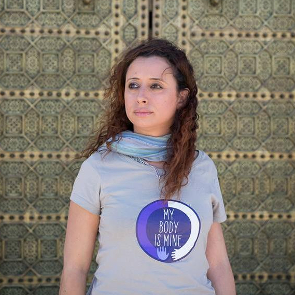
Ibtissame Lachgar is a clinical psychologist, feminist, and co-founder of MALI, an organization defending individual freedoms. She was arrested after posting a photograph criticizing religious patriarchy and is serving a 30-month sentence for "causing harm to Islam."
- Country
- Morocco
- Role
- LGBTQ+ rights defender
- Arrested
- 10 Aug 2025
- Sentence
- Thirty months in prison and a fine of 50,000 Moroccan dirhams (approximately 4,750 euros).
Imprisoned for
300 days.
Days in detention since arrest on 10 August 2025. Counter live · updates daily at 00:00 UTC
-
Arrest
Arrest following social media post
Ibtissame Lachgar was arrested by Moroccan authorities after posting a photograph of herself wearing a T-shirt with the slogan "Allah is lesbian," accompanied by a critique of religious patriarchy. She was charged with causing harm to Islam under Article 267-5 of the Penal Code.
-
Hearing
Trial begins
Lachgar's trial opened at the Rabat First Instance Court, three days after her arrest. The hearing was postponed to allow further proceedings.
-
Hearing
Hearing postponed
A scheduled hearing was postponed to 3 September 2025. Lachgar's lawyers requested provisional release on medical grounds; the court denied the request.
-
Verdict
Conviction and sentence
The Rabat First Instance Court convicted Lachgar of causing harm to Islam and sentenced her to 30 months in prison and a fine of 50,000 dirhams. The verdict was based on Article 267-5 of the Moroccan Penal Code.
Approved
The arrest, and what followed.
Background and Work
Ibtissame Lachgar is a clinical psychologist and feminist defender based in Morocco. She co-founded the Mouvement alternatif pour les libertés individuelles (MALI), an organization advocating for the decriminalization of abortion, gender equality, and the rights of lesbian, gay, bisexual, transgender, and intersex people. MALI has operated in an increasingly restrictive environment, challenging legal frameworks and social norms that limit individual freedoms, particularly those of women and sexual minorities.
Lachgar's work centers on confronting patriarchal structures in both secular and religious contexts. She has used social media as a platform to critique what she describes as the misogynistic and authoritarian elements embedded in religious ideologies. Her public statements have drawn both support from human rights communities and hostility from conservative sectors of Moroccan society.
The Arrest
On 10 August 2025, Moroccan authorities arrested Lachgar following her publication of a photograph on social media. In the image, she wore a T-shirt bearing the slogan "Allah is lesbian." The post included a written critique of religious patriarchy. The photograph provoked immediate backlash. Thousands of social media users targeted her with harassment, including explicit threats of sexual violence, lynching, and execution.
Authorities charged her with "causing harm to Islam" under Article 267-5 of the Moroccan Penal Code. This provision criminalizes public offenses against Islam and allows for imprisonment of up to five years. Her arrest exemplifies the use of religious offense laws to prosecute individuals who challenge dominant narratives around religion, gender, and sexuality.
Detention Conditions and Health
Lachgar is detained in El Arjat Prison near Rabat. She is held in total isolation, without contact with other inmates, including during outdoor time. Her lawyers have repeatedly raised concerns about her medical condition. She is a bone cancer survivor and requires urgent surgery on her left arm. Medical experts have warned that if the procedure is delayed, she may face amputation.
Her legal team requested provisional release to allow her to access necessary medical care. The court denied the request. The denial places her health at acute risk and raises concerns about the state's obligations to provide adequate medical care to detainees.
Legal Proceedings
Lachgar's trial began on 13 August 2025, three days after her arrest. Hearings were subsequently postponed to 27 August and then to 3 September. On 3 September 2025, the Rabat First Instance Court convicted her and sentenced her to 30 months in prison and a fine of 50,000 Moroccan dirhams (approximately 4,750 euros).
The conviction rests on Article 267-5 of the Penal Code, which criminalizes acts deemed offensive to Islam when committed publicly, including online. The law provides no clear definition of what constitutes an offense, leaving its application open to broad and inconsistent interpretation. The sentence reflects the Moroccan judiciary's continued reliance on religious offense provisions to penalize dissent and restrict freedom of expression.
International Response
Lachgar's case has drawn attention from human rights organizations and feminist networks internationally. Her prosecution is seen as emblematic of the heightened risks faced by feminist and LGBTQ rights defenders in North Africa, particularly those who publicly challenge religious authority or advocate for sexual and reproductive rights.
The case raises fundamental concerns about freedom of expression under international human rights law, specifically Article 19 of the International Covenant on Civil and Political Rights, to which Morocco is a state party. Her conviction for non-violent expression contravenes these obligations. The combination of imprisonment, financial penalty, and denial of medical care constitutes a punitive response to peaceful advocacy and illustrates the chilling effect such prosecutions have on civic space.
Sources on file with HuMENA EditorialReading time · 6 minutes
The sentence reflects Morocco's continued use of religious offense laws to silence those who challenge patriarchal norms and defend sexual and gender rights.HuMENA Editorial · 2026
Take action.
Ways to act on Ibtissame (Betty) Lachgar's case — chosen contextually from country, status, and your location.
Compiled by HuMENA's Morocco research team from primary documentation, public filings, family-supplied legal documents, and confidential partner reporting. Editorial responsibility: HuMENA Editorial Board.
Editorial sign-off · pending review