ABDUL
MAJID SABRA
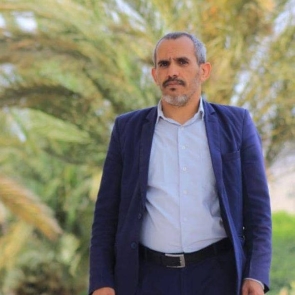
Abdul Majid Sabra is a lawyer who has defended journalists, political activists, and others detained for exercising fundamental rights in Yemen. He is held incommunicado by Houthi authorities in Sana'a and began a hunger strike in December 2025.
- Country
- Yemen
- Role
- Digital rights defender
- Status
- Pre-trial · no verdict
Approved
The arrest, and what followed.
Background and Work
Abdul Majid Sabra is a human rights lawyer based in Sana'a, Yemen. For years he has represented individuals detained by Houthi de facto authorities for peacefully exercising their rights to freedom of expression, assembly, and association. His clients have included journalists targeted for their reporting, political activists held for opposition activities, and others subjected to arbitrary detention in areas controlled by Ansar Allah forces.
He has used social media platforms to document cases, provide updates to families, and advocate publicly for due process and the release of those unlawfully held. His legal practice and online advocacy have made him a visible figure in Yemen's shrinking space for human rights defense.
The Arrest
On 25 September 2025, a group of armed Houthi forces and plainclothes operatives raided Abdul Majid Sabra's office in the Shamila area of Sana'a. They presented an arrest warrant and told those present that he was being detained because of social media posts he had published marking the anniversary of the 26 September Revolution, the 1962 uprising that established the Yemen Arab Republic. The men took him to an undisclosed location.
For several days after the arrest, his family received no information about his whereabouts. They were unable to communicate with him or confirm which authority was holding him. The period of enforced disappearance caused severe psychological distress to his relatives, who had no legal recourse to locate him.
Detention Conditions and Hunger Strike
On 11 December 2025, Abdul Majid Sabra was able to make a phone call to his family. He informed them that he had begun a hunger strike in protest against his arbitrary detention. He is being held at the Houthi Police Intelligence and Counterterrorism Service facility in Sana'a and has been placed in solitary confinement.
The conditions of his detention raise serious concerns about his physical and psychological wellbeing. Prolonged solitary confinement is recognised as a form of cruel, inhuman, or degrading treatment, particularly when combined with the lack of access to legal counsel and the uncertainty surrounding any formal charges or judicial process.
Legal Proceedings
No information is available regarding formal charges, arraignment, or access to legal representation. His family has not been informed of any trial date or legal process. The arrest warrant cited his social media activity, but no legal basis under Yemeni or international law justifies detention for peaceful expression.
His detention appears to be directly linked to his human rights work and his exercise of freedom of expression, both of which are protected under international human rights law to which Yemen is a party.
International Response
Human rights organisations have condemned Abdul Majid Sabra's arbitrary detention and enforced disappearance. The targeting of lawyers who defend individuals detained for exercising fundamental rights represents a particularly severe form of repression, eroding the rule of law and denying due process to entire communities. His case illustrates the systematic suppression of legal advocacy and freedom of expression in Houthi-controlled areas of Yemen.
Sources on file with HuMENA EditorialReading time · 6 minutes
A lawyer who defended journalists and activists detained for their rights is now held in solitary confinement, on hunger strike, for his own peaceful expression.HuMENA Editorial · 2026
Take action.
Ways to act on Abdul Majid Sabra's case — chosen contextually from country, status, and your location.
Compiled by HuMENA's Yemen research team from primary documentation, public filings, family-supplied legal documents, and confidential partner reporting. Editorial responsibility: HuMENA Editorial Board.
Editorial sign-off · published