AMAL
FATHY
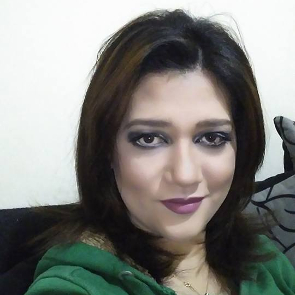
Women's rights defender sentenced to prison for criticising Egypt's failure to protect women from sexual harassment. Convicted on false-news and insult charges after posting a Facebook video; faces parallel terrorism charges.
- Country
- Egypt
- Role
- Blogger
- Sentence
- One year in prison including time served (Case No. 7991 of 2018, reduced on appeal). Parallel terrorism charges in Case No. 621 of 2018 remain unresolved.
Approved
Transnational repression
The defender or their family is targeted across borders. This is a case file in HuMENA's transnational repression archive.
The arrest, and what followed.
Background and Work
Amal Fathy is a women's rights defender who became known for publicly confronting sexual harassment and criticising the Egyptian government's failure to address violence against women. She also spoke openly about the deteriorating economic and social conditions facing ordinary Egyptians and the widespread arbitrary detention of activists and critics. Her advocacy placed her in direct conflict with state authorities who have criminalised dissent under anti-terrorism and false-news statutes.
Fathy is married to Mohamed Lotfy, Executive Director of the Egyptian Commission for Rights and Freedoms, an organisation that documents enforced disappearances, torture in detention, and other grave violations. ECRF staff and their families have faced sustained judicial harassment and surveillance in retaliation for their work, particularly their documentation in high-profile cases including the 2016 torture and murder of Italian researcher Giulio Regeni.
The Arrest
On 9 May 2018, Amal Fathy posted a video to her Facebook account. In it, she criticised the Egyptian government for failing to protect women from sexual harassment and spoke about the general decline in living conditions. Two days later, on 11 May 2018, security forces arrested her and placed her in pre-trial detention.
Authorities opened two separate criminal cases against her. The first, Case No. 7991 of 2018, charged her with "publication of false news undermining national security," "possession of indecent material," and "publicly insulting the State"—all related to the Facebook video. The second, Case No. 621 of 2018, brought far graver charges: "joining a terrorist group," "publishing false news to disrupt public security and harm national interests," and "using the internet to call for acts of terrorism." Prosecutors in the second case cited her suspected links to the April 6 Youth Movement and her husband's human rights activities as grounds for the terrorism charges.
Legal Proceedings
On 29 September 2018, the Maadi Misdemeanour Court sentenced Amal Fathy to two years in prison and imposed a fine of 10,000 Egyptian pounds under Case No. 7991. The court allowed her to suspend the sentence by posting bail of 20,000 pounds. She appealed the verdict the following day and paid the bail, but remained in detention under the parallel terrorism case.
On 27 December 2018, authorities conditionally released Fathy in Case No. 621. Three days later, on 30 December 2018, the Cairo Court of Appeal rejected her appeal in the first case and confirmed the two-year prison sentence. The parallel terrorism charges in Case No. 621 remained open and unresolved.
On 11 January 2022, the Egyptian Court of Cassation upheld her conviction in Case No. 7991, reducing the sentence to one year including time served. The terrorism charges in Case No. 621 continued to hang over her, a form of indefinite legal control.
Context and Pattern of Repression
The dual-case strategy used against Amal Fathy is part of a broader pattern of judicial harassment targeting Egyptian human rights defenders. Authorities layer criminal cases to extend pre-trial detention indefinitely, recycle charges when one case nears conclusion, and use terrorism accusations to justify long sentences and denial of bail. The Egyptian Commission for Rights and Freedoms and its staff have been particularly targeted for their documentation of torture, enforced disappearances, and killings in custody.
Fathy's prosecution illustrates how speech crimes and terrorism charges are combined to silence critics. The Facebook video that triggered her arrest contained no incitement to violence; it addressed sexual harassment and economic hardship. Yet prosecutors invoked national security and terrorism statutes to justify her detention and conviction. The case underscores the shrinking space for women's rights advocacy and the criminalisation of even mild public criticism in Egypt.
Sources on file with HuMENA EditorialReading time · 6 minutes
She spoke about sexual harassment and the government's failure to protect women. Two days later, police came for her.HuMENA Editorial · 2026
Take action.
Ways to act on Amal Fathy's case — chosen contextually from country, status, and your location.
Compiled by HuMENA's Egypt research team from primary documentation, public filings, family-supplied legal documents, and confidential partner reporting. Editorial responsibility: HuMENA Editorial Board.
Editorial sign-off · published