Yanar Mohammed
Co-founder and director of the Organisation of Women's Freedom in Iraq; advocate for women's equality and protection from gender-based violence.
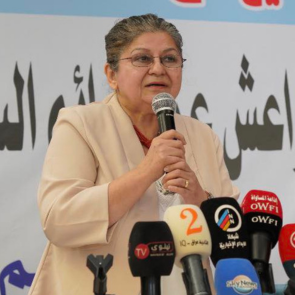
as of 06 Jun 2026
in Iraq
Two men on motorcycles opened fire outside her home, days after she returned from Canada.HuMENA Editorial
Issued Saturday, 6 June 2026
§ 01Background and the caseEditorial narrative
Yanar Mohammed co-founded Iraq's first network of safe houses for women fleeing violence. She was shot and killed outside her home in Baghdad on 2 March 2026, days after returning from Canada.
Editorial update · 13 May 2026 — On 2 March 2026 Yanar Mohammed (66), co-founder and director of the Organisation of Women's Freedom in Iraq (OWFI), was assassinated outside her home in northern Baghdad. Two armed men on a motorcycle opened fire and she died of her wounds in hospital. As of May 2026 the investigation has stalled, the perpetrators remain unidentified, and rights groups continue to demand accountability. She had built a network of safe houses across Iraqi cities and worked for two decades against domestic violence, forced marriage, trafficking, and "honour" killings.
Background and Work
Yanar Mohammed co-founded the Organisation of Women's Freedom in Iraq in 2003, at a moment when the collapse of state institutions left Iraqi women acutely vulnerable to gender-based violence. She built OWFI into the country's first network of safe houses, operating across several Iraqi cities. The shelters provided protection, legal support, and emergency refuge to hundreds of women fleeing domestic abuse, trafficking, and honour-based violence.
Her advocacy extended beyond direct service provision. She campaigned for legal reform, challenged religious and tribal authorities who sanctioned violence against women, and argued consistently for secular governance and women's equality under the law. Her work drew sustained hostility from conservative political factions, militias, and extremist groups who viewed her feminist and secular positions as threats.
Threats and Restrictions
From 2004 onward, Yanar Mohammed received recurrent death threats. Armed groups, including ISIS during its territorial control of parts of Iraq, targeted her with messages intended to force her to abandon her activism. The threats compelled her at times to limit her public movements and to spend periods outside Iraq for her safety.
Despite the persistent risk, she maintained OWFI's operations and continued to speak publicly on women's rights. The organisation's safe houses remained active, and she remained its public face and director.
The Killing
Yanar Mohammed returned to Baghdad from Canada in the final days of February 2026. On the morning of 2 March 2026, at approximately 9:00, she was standing outside her residence in northern Baghdad when two unidentified gunmen on motorcycles approached and opened fire. She was transported immediately to a hospital, where medical personnel attempted to treat her injuries. She died shortly after arrival.
The timing of the attack—days after her return from abroad—raised immediate concerns among colleagues and international observers that her movements had been surveilled. The perpetrators have not been identified, and no group has claimed responsibility.
Impact and Aftermath
The killing sent a wave of fear through Iraq's women's rights community. OWFI issued a statement confirming the attack and expressing alarm for the safety of its remaining staff. Other members of the organisation received threats in the days following Yanar Mohammed's death.
Her assassination represents the elimination of one of Iraq's most visible feminist voices and a direct attack on the infrastructure of protection she had built for women at risk. The safe houses she established continue to operate, but the loss of her leadership leaves the network and the broader Iraqi women's rights movement profoundly diminished.
§ 02Documented chronology7 events on file
-
01 Jan 2003Wednesday
other Co-founded OWFI Yanar Mohammed co-founded the Organisation of Women's Freedom in Iraq, establishing the country's first network of safe houses for women fleeing gender-based violence.
-
01 Jan 2004Thursday
other Death threats began She began receiving sustained death threats from armed groups and conservative factions opposed to her feminist and secular advocacy.
-
27 Feb 2026Friday
other Returned to Baghdad from Canada Yanar Mohammed returned to Baghdad from Canada, just days before the attack on her life.
-
02 Mar 2026Monday
death Killed in armed attack Two unidentified gunmen on motorcycles shot Yanar Mohammed outside her home in northern Baghdad at approximately 9:00. She was transported to hospital but died from her injuries.
-
02 Mar 2026Monday
death Assassinated outside her home in Baghdad Two armed men on a motorcycle opened fire on Yanar Mohammed (66) outside her residence in northern Baghdad. She was transferred to hospital and succumbed to her wounds.
-
04 Mar 2026Wednesday
other International outcry begins Amnesty, FIDH, OMCT, HRW, and Al Jazeera publish statements demanding a full and independent investigation; gender-philanthropy networks call for accountability.
-
01 Apr 2026Wednesday
other Investigation stalls More than a month after the killing, the case remains shrouded in official silence with no perpetrator identified. Rights groups condemn lack of progress.
§ 05Documented violations5 categories
Yanar Mohammed was killed days after returning to Baghdad from Canada, raising concerns that her movements were surveilled across borders. The timing suggests potential transnational monitoring by actors seeking to target her upon re-entry to Iraq.
§ 06Editorial provenanceHuMENA Editorial Board
This case file was compiled by HuMENA's Iraq research team from primary documentation, public filings, family-supplied legal documents, and confidential partner reporting. Editorial responsibility rests with the HuMENA Editorial Board. Where dates or facts are uncertain, the record errs on the side of the source material and notes uncertainty in the live archive at humena.org.
- Generated
- Saturday, 6 June 2026
- Source dataset retrieved
- 2026-05-12
- Live record (canonical)
- https://dev.humena.org/defenders/yanar-mohammed/
- Editorial sign-off
- HuMENA Editorial Board
§ 07Take-downs · corrections · partner submissions
HuMENA welcomes corrections, additions, and take-down requests from the defender, their family, or accredited representatives. Material discrepancies are typically addressed within 72 hours.
Editorial · editorial@humena.org
Take-downs & corrections · takedowns@humena.org
Partner submissions (confidential) · partners@humena.org