SOLAFA
MAGDY
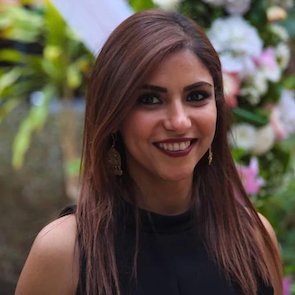
Egyptian journalist and 2020 IWMF Courage in Journalism Award winner, detained since November 2019 on terrorism and false news charges. Denied medical care for uterine bleeding and chronic pain while held in pretrial detention.
- Country
- Egypt
- Role
- Journalist
- Status
- Pre-trial · no verdict
Approved
The arrest, and what followed.
Editorial update · 13 May 2026 — Magdy was released on 14 April 2021 together with her husband, journalist Hossam el-Sayyad, after over a year in pretrial detention. She was awarded the IWMF Courage in Journalism Award in 2020 for her work documenting human rights abuses from inside Egypt's prison system.
Background and Work
Solafa Magdy worked as a journalist in Egypt, reporting on human rights violations and defending press freedom in an environment increasingly hostile to independent journalism. Her reporting drew international recognition, including the International Women's Media Foundation's Courage in Journalism Award in 2020. In December 2020, the City of Paris awarded her honorary citizenship in recognition of her work and her detention.
Solafa is married to fellow journalist Hossam al-Sayyad. Together they have a seven-year-old son. Both Solafa and Hossam were active in documenting abuses and continuing journalistic work despite mounting pressures on the press in Egypt.
The Arrest
In November 2019, Egyptian security forces arrested Solafa, her husband Hossam al-Sayyad, and their friend Mohamed Salah. Authorities accused the three of terrorism-related offenses and spreading false news under Egypt's expansive anti-terrorism and cybercrime legislation. All three deny the charges, which appear to be politically motivated responses to their journalistic and advocacy work.
Since their arrest, Solafa, Hossam, and Mohamed have been held in pretrial detention without trial. Egyptian prosecutors have used the country's renewable pretrial detention system to keep them behind bars indefinitely, a practice that has been widely condemned as a tool of indefinite imprisonment without judicial process.
Detention Conditions and Health
Solafa's health deteriorated sharply during her detention. She suffers from chronic uterine bleeding and has a medical history of tumors, for which she underwent surgery in 2017. Prison authorities have denied her adequate medical examination and treatment. By early 2021, she was experiencing severe pain, chronic internal bleeding, and severe depression.
In rare family visits, relatives reported that Solafa appeared weak and unable to walk without assistance. She had lost significant weight and had stopped eating regularly. Prison authorities confiscated all of her personal belongings and forbade her cellmates from speaking with her, isolating her further.
On 30 January 2021, Solafa's lawyers submitted a formal report to Egyptian authorities documenting abuses she had suffered in detention. The report detailed nighttime interrogations during which she was blindfolded and threatened. Guards told her that if she refused to inform on other detainees, she would never see her husband or her seven-year-old son again. The threats extended to her family outside prison.
Legal Proceedings
No trial has taken place. Egyptian prosecutors have repeatedly renewed Solafa's pretrial detention under the country's system that permits detention for up to two years pending investigation. This system allows authorities to circumvent judicial oversight and effectively imprison individuals without conviction or due process.
The charges against Solafa—terrorism-related offenses and spreading false news—are commonly deployed against journalists, human rights defenders, and political critics in Egypt. The accusations lack substantive evidence and appear designed to punish her for her journalism.
International Response
In February 2021, eight international human rights organizations submitted an urgent letter to the United States Acting Assistant Secretary for Near Eastern Affairs, calling on the U.S. government to demand Solafa's immediate release. The letter was made public in March 2021. It highlighted Solafa's urgent medical needs and the arbitrary nature of her detention, urging direct U.S. engagement with the Egyptian government given the two countries' close relationship and ongoing aid negotiations.
Despite international recognition of her work and widespread advocacy for her release, Solafa remained in detention. Her case illustrates the broader climate of repression facing journalists in Egypt, where independent reporting has been systematically criminalized and those who document abuses face prolonged imprisonment, torture, and medical neglect.
Sources on file with HuMENA EditorialReading time · 6 minutes
She was threatened with never seeing her husband or seven-year-old son again when she refused to inform on other detainees.HuMENA Editorial · 2026
Take action.
Ways to act on Solafa Magdy's case — chosen contextually from country, status, and your location.
Compiled by HuMENA's Egypt research team from primary documentation, public filings, family-supplied legal documents, and confidential partner reporting. Editorial responsibility: HuMENA Editorial Board.
Editorial sign-off · published