Samar Badawi
Women's rights defender who challenged Saudi Arabia's male guardianship system and campaigned for women's right to drive and vote.
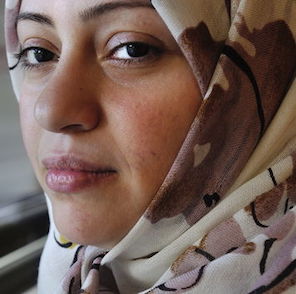
as of 06 Jun 2026
in Saudi Arabia
She was tortured and sexually harassed during interrogation, then tried in a counter-terrorism court for sharing information about women's rights with foreign organisations.HuMENA Editorial
Issued Saturday, 6 June 2026
§ 01Background and the caseEditorial narrative
Samar Badawi challenged Saudi Arabia's male guardianship laws and led campaigns for women's right to drive. Arrested in July 2018, she was held at Dhahban Prison for three years, tortured during interrogation, and prosecuted for sharing information with foreign organisations.
Editorial update · 13 May 2026 — Badawi was conditionally released on 27 June 2021 after almost three years in prison. She remains subject to an indefinite travel ban arbitrarily imposed in December 2014 in retaliation for her women's-rights advocacy and her family's activism.
Background and Work
Samar Badawi spent over a decade challenging the legal structures that subordinated women in Saudi Arabia. Her work centred on two pillars of the kingdom's gender-based control system: the ban on women driving and the male guardianship regime that required women to obtain permission from a male relative to work, travel, marry, or access healthcare.
When Saudi authorities refused to allow her to register as a candidate in the 2011 municipal elections, she filed a formal complaint with the Grievances Board against the Ministry of Municipal and Rural Affairs. The lawsuit was one of the first to frame women's political exclusion as a justiciable violation rather than a matter of tradition.
She joined the 2011–2012 women's driving campaign, a coordinated effort by Saudi women to defy the driving ban by taking to the roads and documenting their arrests. Badawi not only drove herself but assisted other women drivers with police procedures and court filings after they were detained. Her work earned international recognition: in 2012 the United States Department of State awarded her the International Woman of Courage Award.
Harassment and Travel Ban
Saudi authorities began targeting Badawi in 2014. On 16 September 2014, shortly after she participated in the 27th session of the UN Human Rights Council in Geneva, the state imposed a travel ban preventing her from leaving the country. The ban was issued without formal charges and remained in place until her arrest in 2018.
In January 2016 security forces briefly arrested her. In February 2017 she was summoned for interrogation by the Bureau of Investigation in Jeddah. The interrogation focused on her international advocacy and her contacts with foreign human rights organisations. She was released but remained under surveillance.
Arrest and Enforced Disappearance
On 30 July 2018, Saudi security forces arrested Badawi at her home in Jeddah and transferred her to an undisclosed location. For months her family and legal representatives did not know where she was held. The arrest was part of a broader crackdown that began in May 2018 and targeted more than a dozen women's rights defenders, including Loujain al-Hathloul, Nassima al-Sada, and Samar's own sister-in-law, Nouf Abdulaziz.
The wave of arrests coincided with the Saudi government's announcement that it would partially lift the ban on women driving in June 2018. The timing appeared designed to eliminate independent women's rights advocates before the policy change took effect, ensuring that the reform would be credited solely to the crown prince rather than to the women who had risked detention to demand it.
Torture and Interrogation
During her prolonged pre-trial detention, Badawi was subjected to torture and sexual harassment during interrogation. The methods used have not been publicly detailed, but accounts from other women detained in the same period describe beatings, electric shocks, waterboarding, and threats of rape. She was held at Dhahban Prison in Jeddah.
Trial and Sentencing
The first hearing in Badawi's case took place on 27 June 2019, nearly a year after her arrest. She was charged with sharing information related to Saudi women's rights with foreign organisations and officials. The prosecution argued that her engagement with international human rights bodies and foreign diplomats constituted a threat to state security. The maximum sentence for the charges was twenty years.
Her trial was conducted at the Specialized Criminal Court, a tribunal established in 2008 to prosecute terrorism cases but routinely used against peaceful dissidents. The second hearing was held on 20 February 2020. International observers, including diplomats and journalists, were denied permission to attend.
She was sentenced to three years in prison. No public verdict document has been released. The travel ban that had been imposed in 2014 was lifted following her detention.
Release
Samar Badawi was released on 26 June 2021 after serving the full three-year sentence. The Saudi authorities issued no public statement regarding her case. As of her release, many of the women arrested alongside her in 2018 remain imprisoned or under restrictive release conditions, including travel bans and prohibitions on speaking to the media.
§ 02Documented chronology8 events on file
-
16 Sep 2014Tuesday
other Travel ban imposed Saudi authorities placed Samar Badawi under a travel ban days after she participated in the 27th session of the UN Human Rights Council in Geneva.
-
01 Jan 2016Friday
arrest Brief arrest Security forces briefly arrested Samar Badawi. She was released after a short detention.
-
01 Feb 2017Wednesday
other Summoned for interrogation Badawi was summoned for interrogation by the Bureau of Investigation in Jeddah, where she was questioned about her international advocacy and contacts with foreign human rights organisations.
-
30 Jul 2018Monday
arrest Arrested in Jeddah Saudi security forces arrested Samar Badawi at her home in Jeddah and transferred her to an undisclosed location, beginning a period of enforced disappearance.
-
27 Jun 2019Thursday
hearing First hearing The first hearing in Badawi's case was held at the Specialized Criminal Court, nearly a year after her arrest. She was charged with sharing information about Saudi women's rights with foreign organisations.
-
20 Feb 2020Thursday
hearing Second hearing; observers barred The second hearing took place at the Specialized Criminal Court. International observers, including diplomats and journalists, were denied permission to attend.
-
26 Jun 2021Saturday
release Released after full sentence Samar Badawi was released from Dhahban Prison after serving the full three-year sentence.
-
27 Jun 2021Sunday
release Conditionally released Released from prison after almost three years of detention. Indefinite travel ban imposed in December 2014 remains in effect.
§ 03Charges filed by the state1 on record
- 01Sharing information related to Saudi women's rights with foreign organisations and officials
§ 04Sentence
§ 05Documented violations10 categories
§ 06Editorial provenanceHuMENA Editorial Board
This case file was compiled by HuMENA's Saudi Arabia research team from primary documentation, public filings, family-supplied legal documents, and confidential partner reporting. Editorial responsibility rests with the HuMENA Editorial Board. Where dates or facts are uncertain, the record errs on the side of the source material and notes uncertainty in the live archive at humena.org.
- Generated
- Saturday, 6 June 2026
- Source dataset retrieved
- 2026-05-12
- Live record (canonical)
- https://dev.humena.org/defenders/samar-badawi/
- Editorial sign-off
- HuMENA Editorial Board
§ 07Take-downs · corrections · partner submissions
HuMENA welcomes corrections, additions, and take-down requests from the defender, their family, or accredited representatives. Material discrepancies are typically addressed within 72 hours.
Editorial · editorial@humena.org
Take-downs & corrections · takedowns@humena.org
Partner submissions (confidential) · partners@humena.org