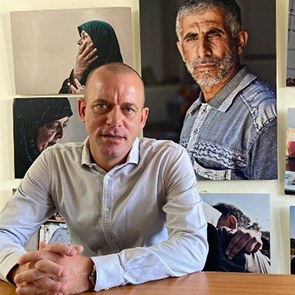
Salah Hamouri
Human rights lawyer representing Palestinian clients; advocate for detainee rights in the Occupied Palestinian Territory.
as of 06 Jun 2026
in Palestine
Hamouri does not know what he is accused of. The file remains secret. He is held indefinitely under a law that allows imprisonment without charge or trial.HuMENA Editorial
Issued Saturday, 6 June 2026
§ 01Background and the caseEditorial narrative
Franco-Palestinian human rights lawyer detained without charge in Al-Moskobiya since March 2022 under administrative detention, facing revocation of his Jerusalem residency and permanent expulsion from his birthplace.
Editorial update · 13 May 2026 — Hamouri was deported by Israeli government order to France on 18 December 2022 and has lived there since. France considered the expulsion contrary to law; the UN High Commissioner for Human Rights characterised it as a war crime. In November 2025 he filed a related complaint at the UN.
Background and Work
Salah Hamouri is a Franco-Palestinian human rights lawyer who has worked for years defending Palestinian detainees and documenting abuses in the Occupied Palestinian Territory. Born in Jerusalem in 1985, he holds both Palestinian and French nationality and has spent his entire life in the city. His legal practice has focused on representing individuals held under administrative detention and other forms of arbitrary confinement by Israeli authorities.
Hamouri's advocacy has drawn sustained harassment from Israeli security services. In October 2020, United Nations human rights experts wrote to the Israeli government expressing concern over what they described as the "misuse of administrative and criminal law proceedings against Mr. Hamouri." His case has become emblematic of the broader Israeli policy of targeting Palestinian lawyers who defend political detainees.
The Arrest
On March 7, 2022, at approximately 4:45 am, around twenty-five Israeli forces broke into Hamouri's apartment in Kufr Aqab, a neighbourhood north of Jerusalem. The raiding unit included members of the Al-Mstaribeen special forces. They entered his bedroom while he was asleep, seized him from his bed, and bound his wrists with plastic zip-ties. Officers confiscated three mobile phones and one laptop before escorting him out. He was first taken to Ofer prison in Ramallah, then transferred to Al-Moskobiya detention centre in Jerusalem.
On March 9, 2022, Ofer military court extended Hamouri's detention for forty-eight hours under the Emergency Law of 1945, a British-era statute still used by Israeli military courts. The following day, March 10, 2022, the Israeli military commander issued a four-month administrative detention order. The order allows Israeli authorities to hold prisoners indefinitely on secret evidence, without charge or trial. Hamouri was not informed of the allegations against him. His lawyer was denied access to the file.
Prolonged Detention Without Charge
On June 5, 2022, the Israeli military extended Hamouri's administrative detention by a further three months. The order was sent directly to his lawyer without a hearing or court appearance. The file remains classified. As of the extension, Hamouri had been held for three months without knowing the substance of any accusation. Administrative detention orders in Israel are renewable indefinitely.
This detention is part of a long pattern. Hamouri has been arrested and detained multiple times over the past decade, each time in connection with his human rights work. No criminal charges related to violence have been sustained against him. The cycle of arrest, detention, and release without trial has marked his professional life.
Revocation of Residency and Threat of Expulsion
On June 29, 2021, Israeli Minister of the Interior Ayelet Shaked announced that she was adopting recommendations from Israeli intelligence services to revoke Hamouri's permanent residency in Jerusalem. The stated grounds were "breach of allegiance," a vague administrative standard applied almost exclusively to Palestinian residents of East Jerusalem. On October 18, 2021, the revocation became official. Hamouri's lawyer challenged the decision. The case is pending before the Israeli Supreme Court.
If the revocation is upheld, Hamouri will be permanently expelled from Jerusalem, the city where he was born and has lived for thirty-seven years. He will be barred from returning. The residency revocation is part of a broader Israeli policy targeting Palestinian Jerusalemites deemed politically active or disloyal. The policy has been condemned by human rights organisations as a form of forced transfer prohibited under international humanitarian law.
Family Separation
Hamouri's wife, Elsa Lefort, is a French national. In 2016, Israeli authorities denied her entry to Israel and the Occupied Palestinian Territory and have refused to renew her permission to live with her husband. The couple's children, who hold French nationality, are also barred. The family has been forcibly separated for six years. Lefort has appealed the ban repeatedly. All appeals have been rejected. She and her children remain in France.
International Response
In October 2020, United Nations special rapporteurs wrote to the Israeli government expressing alarm at the pattern of administrative and judicial harassment targeting Hamouri. They noted that the measures appeared designed to punish him for his legitimate human rights activities. The letter called for his protection and for an end to reprisals against Palestinian human rights defenders. Israeli authorities did not respond substantively.
The French government has raised Hamouri's case repeatedly, citing his French nationality and requesting consular access. French officials have publicly called for his release and for the residency revocation to be rescinded. As of mid-2022, those calls had not resulted in any change in his status.
§ 02Documented chronology10 events on file
-
01 Jan 2016Friday
family · visit · denied Wife and children barred from entry Israeli authorities denied entry to Hamouri's wife Elsa Lefort, a French national, and their children, banning them from Israel and the Occupied Palestinian Territory. The ban has remained in force, forcibly separating the family.
-
29 Jun 2021Tuesday
other Minister announces residency revocation Israeli Minister of the Interior Ayelet Shaked announced the adoption of intelligence service recommendations to revoke Hamouri's permanent residency in Jerusalem on grounds of 'breach of allegiance.'
-
18 Oct 2021Monday
other Residency revocation becomes official The revocation of Hamouri's permanent residency in Jerusalem became official. His lawyer challenged the decision before the Israeli Supreme Court. If upheld, Hamouri will be permanently expelled from his birthplace.
-
07 Mar 2022Monday
arrest Arrested in pre-dawn raid Around twenty-five Israeli forces, including Al-Mstaribeen special unit members, broke into Hamouri's apartment in Kufr Aqab at 4:45 am. He was seized from his bed, bound with zip-ties, and taken to Ofer prison, then transferred to Al-Moskobiya detention centre.
-
09 Mar 2022Wednesday
hearing Detention extended 48 hours Ofer military court extended Hamouri's detention for forty-eight hours under the Emergency Law of 1945, a British-era statute still applied by Israeli military courts.
-
10 Mar 2022Thursday
other Four-month administrative detention order issued The Israeli military commander issued a four-month administrative detention order against Hamouri, allowing indefinite imprisonment on secret evidence without charge or trial. He was not informed of any allegations.
-
05 Jun 2022Sunday
other Detention extended by three months Israeli military extended Hamouri's administrative detention by a further three months. The order was sent directly to his lawyer without a hearing or court appearance. The file remains classified.
-
18 Dec 2022Sunday
other Deported to France By order of the Israeli government, Hamouri was forcibly deported to France.
-
15 Nov 2025Saturday
other Filed UN complaint Hamouri filed a complaint with the UN regarding his deportation, which the UN High Commissioner had characterised as a war crime.
-
01 Mar 2026Sunday
other French court protects free speech A French administrative court suspended a prefectural ban on a public roundtable with Hamouri, ruling the ban was manifestly illegal.
§ 03Charges filed by the state1 on record
- 01No charges filed; held under administrative detention without access to evidence
§ 05Documented violations9 categories
Hamouri's French wife and children have been barred from entering Israel and the Occupied Palestinian Territory since 2016, constituting family-based transnational repression. The threatened revocation of his Jerusalem residency and permanent expulsion from his birthplace also amounts to forced exile targeting a dual Franco-Palestinian national.
§ 06Editorial provenanceHuMENA Editorial Board
This case file was compiled by HuMENA's Palestine research team from primary documentation, public filings, family-supplied legal documents, and confidential partner reporting. Editorial responsibility rests with the HuMENA Editorial Board. Where dates or facts are uncertain, the record errs on the side of the source material and notes uncertainty in the live archive at humena.org.
- Generated
- Saturday, 6 June 2026
- Source dataset retrieved
- 2026-05-12
- Live record (canonical)
- https://dev.humena.org/defenders/salah-hamouri/
- Editorial sign-off
- HuMENA Editorial Board
§ 07Take-downs · corrections · partner submissions
HuMENA welcomes corrections, additions, and take-down requests from the defender, their family, or accredited representatives. Material discrepancies are typically addressed within 72 hours.
Editorial · editorial@humena.org
Take-downs & corrections · takedowns@humena.org
Partner submissions (confidential) · partners@humena.org