SAIDA
EL ALAMI
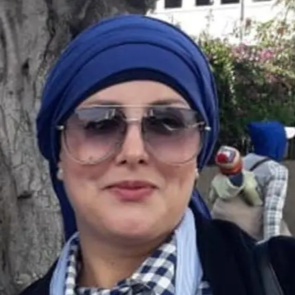
Saida El Alami uses social media to denounce corruption and restrictions on free speech in Morocco. Arrested in July 2025, she was sentenced to three years in prison for insulting the judiciary and disseminating false allegations.
- Country
- Morocco
- Role
- Blogger
- Sentence
- Three years in prison and a fine of 200,000 dirhams (approximately 18,700 euros).
Approved
The arrest, and what followed.
Background and Work
Saida El Alami is a blogger and digital rights defender from Morocco who has used social media platforms and participated in peaceful street demonstrations to document and denounce corruption, abuses of power, and the narrowing of civic space in her country. Her work focuses on the systematic use of criminal law to suppress critical speech, particularly provisions targeting insult to state bodies and the dissemination of what authorities classify as false information.
In 2022, she was arrested and prosecuted in two separate criminal cases. Both resulted in convictions and prison sentences that together totaled three years, plus a fine. The charges in those earlier cases were similar to those she now faces again: insult and false allegations related to her online commentary. She served that sentence until July 2024, when she was released under a royal pardon. Upon her release, she resumed her activism, continuing to post commentary about due process violations and the use of the penal code to stifle dissent.
The Arrest
On 1 July 2025, officers from the National Judicial Police Brigade arrested Saida El Alami on a street in Casablanca without prior notice or warrant. The Moroccan Association for Human Rights reported that no criminal act had been observed or alleged at the time of her arrest. She was taken to a police station and held in preliminary investigative custody for two days.
On the morning of 3 July 2025, she was brought before the King's Prosecutor at the Ain Sebaa Court of First Instance. The charges were insulting a legally organized body, disseminating false allegations, and insulting the judiciary. The prosecutor ordered her placed in pre-trial detention. Her defence lawyers report that she was denied access to legal counsel during that appearance. A trial date was initially set for 8 July.
Legal Proceedings
Saida El Alami refused to attend the hearing scheduled for 8 July 2025. Her legal team stated that the refusal was a protest against the denial of her right to counsel when she appeared before the prosecutor five days earlier. The trial was postponed to 15 July.
On 15 July, she appeared before the Casablanca Court of First Instance and informed the court that she had begun a hunger and water strike the previous day. Her lawyers explained that the strike was intended to protest the circumstances of her arrest and what they described as violations of Moroccan law and international human rights standards, particularly guarantees of freedom of opinion and expression. At the end of the hearing, under urging from both the court and her defence team, she agreed to resume drinking water. The court granted a further postponement to allow her lawyers additional time to prepare her defence, scheduling the next hearing for 23 July 2025.
On 16 September 2025, the Criminal Court of Ain Sebaa in Casablanca handed down its judgment. Saida El Alami was convicted on all three charges and sentenced to three years in prison and a fine of 200,000 dirhams, approximately 18,700 euros.
Criticism and Context
The Moroccan Committee for the Support of Political Prisoners condemned the verdict, describing it as part of a broader pattern of criminalizing peaceful expression. The organization noted that the continued deployment of penal code provisions to silence critics conflicts with Article 25 of the Moroccan Constitution, which guarantees freedom of opinion and expression, and with Article 19 of the International Covenant on Civil and Political Rights, to which Morocco is a party.
The case reflects a sustained trend in Morocco of using vaguely worded criminal statutes—particularly those related to insult of state institutions and false allegations—to prosecute individuals who criticize public authorities or document human rights violations. Saida El Alami's prosecution follows her earlier three-year imprisonment in 2022 and her release under royal pardon in July 2024. Her re-arrest less than a year after that pardon underscores the precarious position of digital rights defenders and online commentators in Morocco, where prior punishment and even official clemency provide no protection from renewed prosecution for similar speech.
Sources on file with HuMENA EditorialReading time · 6 minutes
The continued use of the penal code to silence critical voices undermines freedom of opinion and expression guaranteed under Morocco's own constitution.HuMENA Editorial · 2026
Take action.
Ways to act on Saida El Alami's case — chosen contextually from country, status, and your location.
Compiled by HuMENA's Morocco research team from primary documentation, public filings, family-supplied legal documents, and confidential partner reporting. Editorial responsibility: HuMENA Editorial Board.
Editorial sign-off · published