REHAB
MUBARAK
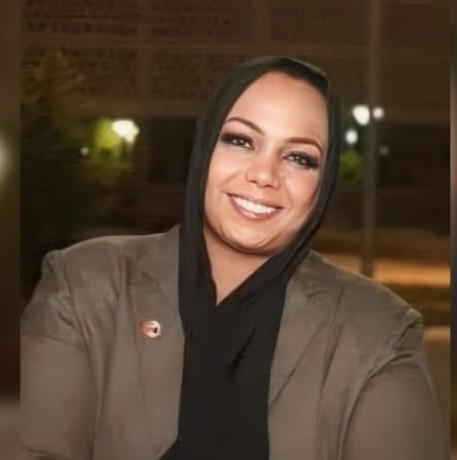
Rehab Mubarak is a lawyer and member of the Emergency Lawyers executive office who documents human rights violations during Sudan's ongoing conflict. She now faces charges carrying potential capital punishment and a coordinated smear campaign.
- Country
- Sudan
- Role
- Human rights monitor
- Status
- Pre-trial · no verdict
Approved
The arrest, and what followed.
Background and Work
Rehab Mubarak is a Sudanese lawyer and woman human rights defender who serves on the executive office of the Emergency Lawyers, a group formed to provide legal support and documentation during Sudan's escalating conflict. Her work centers on monitoring human rights abuses, including allegations of prohibited weapons use, and offering legal analysis to advance accountability mechanisms. She has focused particularly on supporting victims of violations and advocating for respect for freedom of expression and the rule of law in a context where both are under sustained pressure.
The Emergency Lawyers emerged as a critical response network during Sudan's ongoing crisis, offering legal representation and documentation when formal justice systems have been strained or compromised. Rehab's role within the executive office placed her at the intersection of legal practice and human rights advocacy, work that requires documenting sensitive information about abuses committed by parties to the conflict.
The Criminal Proceedings
On 17 April 2026, Sudanese judicial authorities initiated criminal proceedings against Rehab Mubarak under Articles 51 and 66 of the Sudanese Criminal Code of 1991. The charges include "waging war against the state" and "spreading false news," accusations rooted in allegations that she disseminated information deemed harmful to national security. Both charges carry severe penalties; the charge of waging war against the state can extend to capital punishment.
Authorities issued an arrest warrant and simultaneously took steps to have her dismissed from the Sudanese Bar Association, a measure that would strip her of her professional license and her ability to continue practicing law. The proceedings were initiated in a climate of escalating reprisals against defenders who document violations during the conflict, with authorities increasingly deploying vague national-security charges to silence independent voices.
The Smear Campaign
On 18 April 2026, one day after the charges were announced, a coordinated defamation campaign intensified across media platforms and social networks. The campaign called for Rehab's prosecution, discredited her documentation work, and sought to undermine her professional credibility. The smear campaign appeared coordinated, suggesting state involvement or encouragement, and served to isolate her from public support at a moment when she faced the most serious legal jeopardy of her career.
Such campaigns are a hallmark of judicial harassment in the region: legal charges are accompanied by public vilification designed to delegitimize the defender and discourage solidarity. In Rehab's case, the attacks targeted both her person and her work, framing her documentation efforts as threats to national security rather than efforts to promote accountability.
Legal and Professional Implications
The charges against Rehab Mubarak violate international standards protecting the independence of lawyers. The United Nations Basic Principles on the Role of Lawyers affirm that lawyers must be able to perform their professional functions without intimidation, hindrance, harassment, or improper interference. Charging a lawyer with waging war against the state for work related to documenting violations undermines the legal profession's ability to function independently and erodes the right to legal representation.
The use of overly broad charges related to national security and false information reflects a pattern documented across Sudan and the wider region. These charges are designed to be elastic enough to capture almost any form of dissent or documentation, making it nearly impossible for defenders to predict what conduct might trigger prosecution. The vagueness itself has a chilling effect, discouraging other lawyers and advocates from continuing similar work.
Context and Pattern
Rehab Mubarak's case is part of a broader crackdown on defenders documenting abuses during Sudan's conflict. As the conflict has intensified, so too have efforts to suppress independent documentation and legal accountability mechanisms. Lawyers, journalists, and human rights monitors face arrest warrants, charges under national-security laws, and campaigns to strip them of professional credentials.
The targeting of Rehab appears directly linked to her documentation of prohibited weapons use, a particularly sensitive area given ongoing international scrutiny of the conflict. By charging her with waging war against the state, authorities signal that documenting certain categories of abuse will be treated not as legal work but as enmity to the state itself, a framing that forecloses any possibility of accountability.
International Human Rights Standards
The proceedings against Rehab Mubarak violate her rights under international law, including the right to freedom of expression protected under Article 19 of the International Covenant on Civil and Political Rights, to which Sudan is a party. They also undermine the right to a fair trial and the independence of the legal profession. International human rights organizations have expressed concern that the charges constitute judicial harassment designed to silence documentation of violations and perpetuate impunity for serious abuses committed during the conflict.
Sources on file with HuMENA EditorialReading time · 6 minutes
The charges rest on her documentation of prohibited weapons use—work that should be protected, not prosecuted as an act of war.HuMENA Editorial · 2026
Take action.
Ways to act on Rehab Mubarak's case — chosen contextually from country, status, and your location.
Compiled by HuMENA's Sudan research team from primary documentation, public filings, family-supplied legal documents, and confidential partner reporting. Editorial responsibility: HuMENA Editorial Board.
Editorial sign-off · published