Raif Badawi
Blogger and activist; co-founder of the Free Saudi Liberals website documenting abuses by religious and morality police.
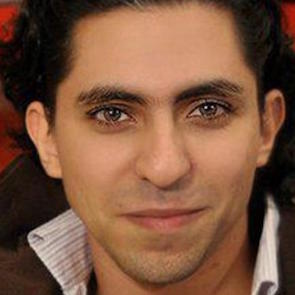
as of 06 Jun 2026
in Saudi Arabia
He was flogged in public simply for moderating a website about free speech and pluralism.HuMENA Editorial
Issued Saturday, 6 June 2026
§ 01Background and the caseEditorial narrative
Raif Badawi, a Saudi blogger and co-founder of Free Saudi Liberals, served ten years in prison for posts about free speech and pluralism. He was sentenced to 1,000 lashes, fined one million riyals, and released in 2022 subject to a travel ban.
Editorial update · 13 May 2026 — Badawi was released on 11 March 2022 after completing his ten-year prison sentence. He is now subject to a ten-year travel ban that prevents him from joining his wife and three children, who live in Sherbrooke, Quebec, and a ten-year ban on social-media use.
Background and Work
Raif Badawi created the Free Saudi Liberals website in 2008 as a forum for open discussion of religion, politics, and society. The site published essays and hosted debates on topics the Saudi state considered off-limits: secularism, the separation of religion from law, and abuses by the Commission for the Promotion of Virtue and Prevention of Vice, commonly known as the religious police. Badawi moderated discussions and contributed his own writing. He advocated for freedom of conscience and expression, framing them as universal rights that should apply even in the Kingdom.
His posts did not call for violence or the overthrow of the state. They called for debate. That was enough to make him a target.
Arrest and Charges
Raif Badawi was arrested on 17 June 2012 in Jeddah. The charge was insulting Islam through electronic channels. Prosecutors initially added a charge of apostasy, which carries the death penalty under Saudi law. The trial opened in a criminal court that lacked jurisdiction over religious crimes, prolonging the proceedings and leaving Badawi in pre-trial detention for over a year.
In July 2013 he was sentenced to seven years in prison and six hundred lashes. That sentence was appealed and overturned. In May 2014, after a retrial before a different chamber, he was sentenced to ten years in prison, one thousand lashes to be administered in twenty weekly sessions of fifty each, a fine of one million Saudi riyals (approximately 240,000 euros), a ban on using the internet for ten years after release, and a ten-year travel ban. The harsher sentence followed intervention by prosecutors seeking a more severe punishment.
Public Flogging and International Response
On 9 January 2015, Raif Badawi was taken from Buraiman Prison in Jeddah to the plaza outside Al Juffali Mosque. After Friday prayers, in front of a crowd of worshippers and onlookers, he was flogged fifty times. Video and images of the flogging circulated internationally. Governments, UN bodies, and human rights organisations condemned the punishment as torture. Under sustained diplomatic pressure, Saudi authorities postponed further flogging sessions indefinitely, citing medical grounds. The remaining 950 lashes were never administered, but the sentence was never annulled.
Raif Badawi remained imprisoned in Buraiman Prison throughout the remainder of his sentence. His wife and children, having fled to Canada in 2012, continued to campaign for his release. The case became emblematic of Saudi Arabia's criminalisation of peaceful expression and the use of judicial punishment as spectacle and deterrence.
Hunger Strike and Detention Conditions
On 17 September 2019, Badawi began an open-ended hunger strike. Prison authorities had confiscated his books and essential medication. The protest drew attention to deteriorating conditions and the absence of any prospect for early release. Four days later, on 21 September, he ended the strike after receiving a visit from the Saudi Human Rights Commission. It remains unclear what assurances, if any, were given. No public statement followed the visit, and his detention continued unchanged.
Release and Ongoing Restrictions
Raif Badawi was released on 11 March 2022 after serving his full ten-year sentence. He did not receive early release, pardon, or commutation. The ten-year travel ban imposed as part of his 2014 sentence remains in force. He is prohibited from leaving Saudi Arabia until March 2032. He remains separated from his wife and children, who hold asylum status in Canada. The travel ban functions as a continued punishment and a tool of family separation. Badawi cannot reunite with his children, and they cannot safely return to Saudi Arabia while he remains a convicted blasphemer under Saudi law.
§ 02Documented chronology8 events on file
-
17 Jun 2012Sunday
arrest Arrest in Jeddah Raif Badawi was arrested in Jeddah on charges of insulting Islam through electronic channels.
-
01 Jul 2013Monday
verdict First sentence A criminal court sentenced Badawi to seven years in prison and six hundred lashes. The sentence was later appealed and overturned.
-
07 May 2014Wednesday
sentence Retrial and harsher sentence After a retrial, Badawi was sentenced to ten years in prison, one thousand lashes, a fine of one million Saudi riyals, a ban on internet use for ten years, and a ten-year travel ban.
-
09 Jan 2015Friday
other Public flogging outside mosque Badawi was flogged fifty times in public outside Al Juffali Mosque in Jeddah after Friday prayers. The remaining lashes were postponed indefinitely following international condemnation.
-
17 Sep 2019Tuesday
hunger · strike · start Hunger strike begins Badawi began an open-ended hunger strike in protest of the confiscation of his books and medication and worsening detention conditions.
-
21 Sep 2019Saturday
hunger · strike · end Hunger strike ends Badawi ended his hunger strike after receiving a visit from the Saudi Human Rights Commission.
-
11 Mar 2022Friday
release Released after full sentence Raif Badawi was released from Buraiman Prison after serving the full ten years. A ten-year travel ban preventing him from leaving Saudi Arabia remains in force.
-
11 Mar 2022Friday
release Released after ten years Released from prison after completing his ten-year sentence. Travel ban and ten-year social-media ban imposed.
§ 03Charges filed by the state2 on record
- 01Insulting Islam through electronic channels
- 02Apostasy (later dropped or not pursued)
§ 04Sentence
§ 05Documented violations11 categories
This defender's case is logged in HuMENA's cross-border targeting archive. Specific tactics documented include the violations listed above.
§ 06Editorial provenanceHuMENA Editorial Board
This case file was compiled by HuMENA's Saudi Arabia research team from primary documentation, public filings, family-supplied legal documents, and confidential partner reporting. Editorial responsibility rests with the HuMENA Editorial Board. Where dates or facts are uncertain, the record errs on the side of the source material and notes uncertainty in the live archive at humena.org.
- Generated
- Saturday, 6 June 2026
- Source dataset retrieved
- 2026-05-12
- Live record (canonical)
- https://dev.humena.org/defenders/raif-badawi/
- Editorial sign-off
- HuMENA Editorial Board
§ 07Take-downs · corrections · partner submissions
HuMENA welcomes corrections, additions, and take-down requests from the defender, their family, or accredited representatives. Material discrepancies are typically addressed within 72 hours.
Editorial · editorial@humena.org
Take-downs & corrections · takedowns@humena.org
Partner submissions (confidential) · partners@humena.org