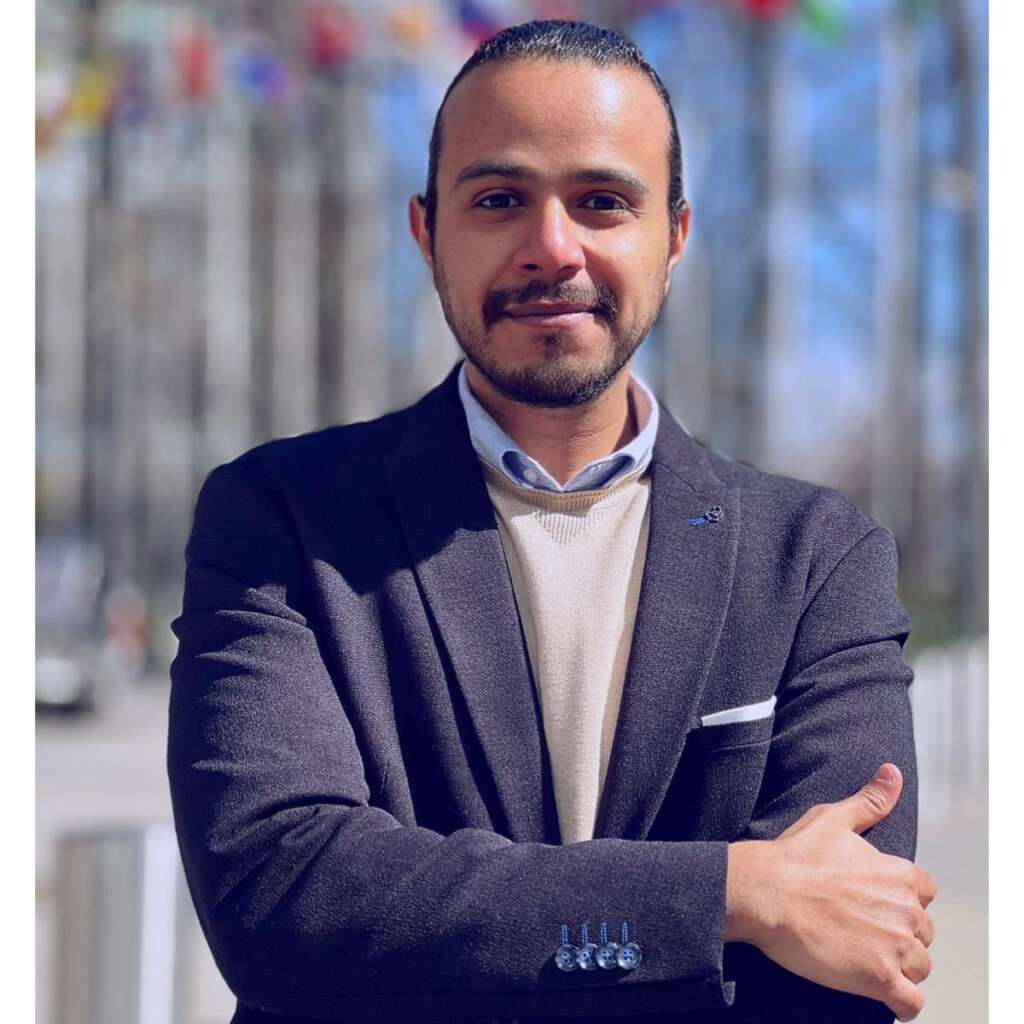
Mostafa Fouad
Lawyer and civil society leader; co-founder and Executive Director of HuMENA for Human Rights and Civic Engagement; advocate for LGBTQ rights, transitional justice, and diaspora mobilisation.
as of 06 Jun 2026
in Egypt
Egyptian authorities have sought to silence him by punishing the family he left behind.HuMENA Editorial
Issued Saturday, 6 June 2026
§ 01Background and the caseEditorial narrative
Egyptian human rights lawyer living in exile since 2017. After co-founding HuMENA and launching a campaign to expose officials implicated in abuses, Egyptian authorities raided his family home repeatedly and interrogated his parents and threatened his brother.
Background and Work
Mostafa Fouad is an Egyptian lawyer with more than a decade of experience in human rights defence and civil society mobilisation across the Middle East and North Africa. He co-founded HuMENA for Human Rights and Civic Engagement and has served as its Executive Director. His work focuses on diaspora organising, documentation of abuses by Egyptian state and security institutions, LGBTQ rights advocacy, and transitional justice.
Fouad left Egypt in December 2017 as the space for independent civil society collapsed under Law 70 of 2017, which subjects non-governmental organisations to sweeping security oversight, asset freezes, and criminal penalties for receiving foreign funding or engaging in work the state deems political. He continued his advocacy from exile.
The Unmask Them Campaign and the Start of Reprisals
In January 2019 HuMENA launched the Unmask Them campaign, publicly identifying Egyptian officials implicated in torture, enforced disappearance, extrajudicial killing, and other grave human rights violations. The campaign called for accountability and for repeal of the 2017 NGO law. Within two months Egyptian authorities began a pattern of reprisals against Fouad's family in Cairo.
On 17 March 2018 — prior to the campaign's launch but after Fouad's departure — authorities raided the family home without a warrant. On 3 April 2019, following the campaign, National Security forces entered the home again, broke into Fouad's former bedroom, and seized his laptop, books, papers, and notebooks.
Interrogation of Family Members
On 26 April 2020 a National Security unit forced entry into his parents' home in Cairo and summoned his mother for interrogation at National Security headquarters. His parents complied with the summons on 27 April 2020 and were interrogated. On 29 April 2020 they were ordered to return within two days.
In early May 2020 they returned and were questioned in detail about Fouad's human rights activities, his funding sources, and his connections to other named Egyptian defenders. During the same period a money transfer agent who had facilitated family remittances was arrested on accusations of terrorism financing.
Threats Against His Brother
On 20 May 2020 Fouad's brother Mahmoud, who lives in Cairo with his wife and two children, received a phone call from someone identifying himself as National Security. The caller demanded that Mahmoud provide detailed information about Mostafa's work and threatened that if he did not cooperate he would be arrested and prosecuted.
International Response
On 30 June 2020 twenty-seven international and regional human rights organisations — including the Egyptian Front for Human Rights, EuroMed Rights, the Gulf Centre for Human Rights, Freedom House, CIVICUS, Robert F. Kennedy Human Rights, the International Service for Human Rights, the Maharat Foundation, MADA, The Freedom Initiative, Project on Middle East Democracy, and the Committee for Justice — issued a joint statement calling on Egyptian authorities to end harassment of Fouad's family and to cease using transnational repression to silence Egyptian civil society in exile.
Fouad remains outside Egypt. His family in Cairo continues to live under the threat of further reprisals.
§ 02Documented chronology10 events on file
-
01 Dec 2017Friday
other Left Egypt for exile Fouad left Egypt as space for independent civil society collapsed under the 2017 NGO law.
-
17 Mar 2018Saturday
other First home raid without warrant Authorities raided the family home in Cairo without a warrant.
-
01 Jan 2019Tuesday
other Unmask Them campaign launched HuMENA launched the Unmask Them campaign, publicly naming Egyptian officials implicated in grave violations and calling for repeal of Law 70/2017.
-
03 Apr 2019Wednesday
other Home raided, belongings seized National Security forces entered the family home, broke into Fouad's former bedroom, and seized his laptop, books, papers, and notebooks.
-
26 Apr 2020Sunday
other Mother summoned for interrogation A National Security unit forced entry into his parents' home and summoned his mother for interrogation.
-
27 Apr 2020Monday
other Parents interrogated at NSA HQ His parents complied with the summons and were interrogated at National Security headquarters in Cairo.
-
29 Apr 2020Wednesday
other Parents ordered to return His parents were ordered to return for further questioning within two days.
-
01 May 2020Friday
other Parents questioned about activities His parents returned and were questioned in detail about Fouad's human rights work, funding sources, and connections to other defenders. A money transfer agent was arrested on terrorism-financing accusations.
-
20 May 2020Wednesday
threats · intimidation Brother threatened by National Security Fouad's brother Mahmoud received a phone call from someone identifying himself as National Security, demanding information about Mostafa and threatening arrest.
-
30 Jun 2020Tuesday
other 27 organisations issue joint statement Twenty-seven international and regional organisations called on Egyptian authorities to end harassment of Fouad's family and stop using transnational repression.
§ 05Documented violations6 categories
Egyptian National Security conducted repeated raids on Fouad's family home in Cairo, interrogated his parents about his exile activities, threatened his brother with arrest, and arrested a money transfer agent connected to family remittances — classic family-targeting tactics to silence an exiled defender.
§ 06Editorial provenanceHuMENA Editorial Board
This case file was compiled by HuMENA's Egypt research team from primary documentation, public filings, family-supplied legal documents, and confidential partner reporting. Editorial responsibility rests with the HuMENA Editorial Board. Where dates or facts are uncertain, the record errs on the side of the source material and notes uncertainty in the live archive at humena.org.
- Generated
- Saturday, 6 June 2026
- Source dataset retrieved
- 2020-06-30
- Live record (canonical)
- https://dev.humena.org/defenders/mostafa-fouad/
- Editorial sign-off
- HuMENA Editorial Board
§ 07Take-downs · corrections · partner submissions
HuMENA welcomes corrections, additions, and take-down requests from the defender, their family, or accredited representatives. Material discrepancies are typically addressed within 72 hours.
Editorial · editorial@humena.org
Take-downs & corrections · takedowns@humena.org
Partner submissions (confidential) · partners@humena.org