AHMED
AMASHA
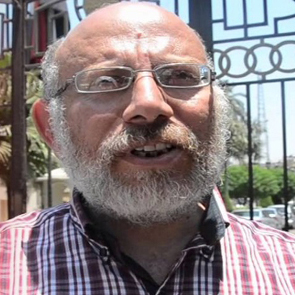
Ahmed Amasha is a veterinarian, trade unionist, and co-founder of the League for Families of the Disappeared. He has been arrested twice, disappeared, tortured, and held in prolonged detention on recycled terrorism charges since 2017.
- Country
- Egypt
- Role
- Environmental defender
- Arrested
- 1 Jun 2020
- Status
- Pre-trial · no verdict
Disappeared for
Two thousand one hundred+ days.
Days disappeared since 1 June 2020. Counter live · updates daily at 00:00 UTC
-
Arrest
Arrested at checkpoint in Nasr City
Police arrested Ahmed Amasha at a checkpoint in Nasr City, Cairo, and forcibly disappeared him. He was held incommunicado in an undisclosed location for twenty-two days.
-
Reappearance
Reappeared before prosecutor after torture
After twenty-two days of enforced disappearance and torture, he reappeared before the Public Prosecutor in Tagamo' El Khames. He was interrogated without a lawyer and charged with belonging to a banned group.
-
Transfer
Transferred to Tora Prison
Following his appearance before the prosecutor, he was transferred to Tora Prison, where he remained in detention.
-
Case update
UN Special Procedures appeal issued
UN Special Procedures issued an appeal to Egyptian authorities concerning his abduction, torture, and arbitrary detention.
-
Release
Released on bail with reporting conditions
A court ordered his provisional release on bail. He was required to report to a police station twice weekly as a condition of release.
-
Arrest
Re-arrested at his home in Helwan
Security officers came to his home in Helwan, Cairo, blindfolded him, and took him to an unknown location, beginning a second enforced disappearance.
-
Reappearance
Reappeared before SSSP with torture marks
After twenty-five days of enforced disappearance, he reappeared before the Supreme State Security Prosecution bearing visible signs of torture. He was charged with joining a terrorist group in Case No. 1360 of 2019.
-
Case update
Lawyer glimpses him in Tora Aqrab 2
His lawyer was permitted a brief, distant glimpse of him through glass at Tora Maximum Security Prison 2 (Aqrab 2), among approximately 250 detainees. No communication was allowed.
-
Case update
Formally charged with terrorism offences
After more than two years in pre-trial detention, he was formally charged with terrorism offences in retaliation for his human rights work.
-
Transfer
Transferred to Badr Prison
He was transferred to Badr Prison, where he has since been held under punitive conditions including solitary confinement, continuous lighting, and round-the-clock camera surveillance.
Approved
The arrest, and what followed.
Background and Work
Ahmed Amasha is a veterinarian and prominent trade union organiser who has worked for decades on labour rights, political freedoms, and environmental advocacy in Egypt. He became a member of Kefaya, one of the country's most visible opposition movements, calling for democratic reform and an end to authoritarian rule. His activism extended to environmental campaigns that challenged both state and private-sector interests.
In response to the wave of enforced disappearances that intensified in Egypt after 2013, he co-founded the League for Families of the Disappeared. The organisation provides legal advice to relatives of victims, helps file complaints with domestic and international bodies, and documents patterns of arbitrary detention and secret custody. This work made him a repeated target of state security agencies.
First Arrest, Enforced Disappearance, and Torture
On 10 March 2017, police arrested Ahmed Amasha at a checkpoint in Nasr City, Cairo, and forcibly disappeared him. He was held in an undisclosed location for twenty-two days. During that period he was subjected to repeated electric shocks, sexual assault with a stick, constant handcuffing and blindfolding, and explicit threats of violence against his wife and daughters. These acts were designed to force him to sign a pre-written confession.
On 1 April 2017, he reappeared before the Public Prosecutor in Tagamo' El Khames, Cairo. He was interrogated without a lawyer present and charged with belonging to a banned group. He was then transferred to Tora Prison, where he remained in detention for more than two years.
In May 2017, UN Special Procedures issued an appeal to Egyptian authorities concerning his abduction, torture, and arbitrary detention. The UN Working Group on Arbitrary Detention later issued Opinion No. 78/2017, concluding that his detention was arbitrary and calling for his immediate release. Between 2017 and 2023, the UN Secretary-General highlighted his case repeatedly in annual reports on reprisals against individuals who cooperate with UN human rights mechanisms.
Provisional Release and Restrictions
On 4 October 2019, a court ordered his provisional release on bail. The release was conditional: he was required to report to a police station twice weekly. For nine months he lived under these restrictions, unable to travel freely, under continuous administrative surveillance.
Second Arrest and Enforced Disappearance
On 17 June 2020, security officers came to his home in Helwan, Cairo, blindfolded him, and took him to an unknown location. His family received no information about his whereabouts. After twenty-five days, on 12 July 2020, he reappeared at the offices of the Supreme State Security Prosecution. He bore visible signs of torture. He was charged in Case No. 1360 of 2019 with joining a terrorist group, a charge routinely used to criminalise human rights and opposition activity in Egypt. He was then transferred to an undisclosed location.
On 7 December 2020, his lawyer was permitted a brief glimpse of him through glass at Tora Maximum Security Prison 2, known as Aqrab 2. He was among approximately 250 detainees. The lawyer was not permitted to speak with him.
Prolonged Pre-Trial Detention and Health Deterioration
Ahmed Amasha remained in pre-trial detention in Tora Prison for more than two years. He was denied adequate medical care, sufficient food, sunlight, and access to his family and legal counsel. His health, already compromised by the torture he suffered in 2017 and 2020, continued to deteriorate. His family does not know whether he is receiving the medication and treatment he requires.
In August 2022, after more than two years without trial, he was formally charged with terrorism offences in direct retaliation for his human rights work.
Transfer to Badr Prison and Punitive Conditions
In September 2022, he was transferred to Badr Prison. Since then he has been held under punitive conditions that include prolonged solitary confinement, continuous electric lighting, and round-the-clock camera surveillance. These measures constitute cruel, inhuman, and degrading treatment under international law.
Family visits remain severely restricted. His wife and daughters have been subjected to threats by security personnel, compounding the psychological harm inflicted on the entire family.
Ongoing Detention and International Violations
Ahmed Amasha has now been detained for more than four years without a final verdict. His trial has dragged on without resolution, violating his right to a prompt and fair hearing. The repeated renewals of his pre-trial detention and the recycling of charges amount to punishment without conviction.
He is now sixty-four years old. His continued imprisonment is the direct result of his work defending the families of the disappeared, organising labour, and advocating for political change. The combination of enforced disappearance, torture, sexual violence, threats against his family, prolonged arbitrary detention, and inhuman conditions place him at grave and ongoing risk.
Sources on file with HuMENA EditorialReading time · 6 minutes
He co-founded a league to help families find the disappeared, then became one of the disappeared himself.HuMENA Editorial · 2026
Take action.
Ways to act on Ahmed Amasha's case — chosen contextually from country, status, and your location.
Compiled by HuMENA's Egypt research team from primary documentation, public filings, family-supplied legal documents, and confidential partner reporting. Editorial responsibility: HuMENA Editorial Board.
Editorial sign-off · published