Abdulaziz Al-Shubaili
Lawyer; founding member of the Saudi Civil and Political Rights Association (ACPRA); defender of civil and political rights.
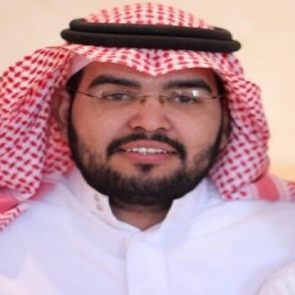
as of 06 Jun 2026
in Saudi Arabia
He defended his colleagues in court before he became a defendant himself, imprisoned for the same work.HuMENA Editorial
Issued Saturday, 6 June 2026
§ 01Background and the caseEditorial narrative
Abdulaziz Al-Shubaili is a lawyer and founding member of the Saudi Civil and Political Rights Association who defended fellow activists in court and called for reform online. He is serving eight years in prison for his work.
Background and Work
Abdulaziz Al-Shubaili, born in 1985, is a Saudi lawyer and a principal member of the Saudi Civil and Political Rights Association, known by its Arabic acronym ACPRA. The association was established in 2009 to monitor and document human rights violations in Saudi Arabia and to advocate for constitutional reform, an independent judiciary, and respect for civil and political rights.
Al-Shubaili participated in the legal defence of several ACPRA colleagues who were prosecuted for their work. He used platforms including Twitter to call for reform, criticise judicial practices, and speak publicly about rights and freedoms. His advocacy made him a target of sustained official scrutiny.
Harassment and Arrest
Between November and December 2013, Al-Shubaili was summoned four times by the Interrogation and Prosecution Department in Al Qassim province. Each summons was an act of intimidation, signalling that the state was preparing a case against him.
On 10 January 2017, the Specialised Criminal Court in Riyadh sentenced him to eight years in prison. The court also imposed an eight-year ban on writing on social media, to begin immediately, and an eight-year travel ban to commence after his release. Despite the sentence, authorities did not detain him at that time.
On 17 September 2017, security forces arrested Al-Shubaili in Al Qassim province. He was transferred to Onayza Prison, where he remains held.
Charges and Legal Proceedings
The charges against Al-Shubaili included publishing a statement calling for demonstrations, accusing judges of dishonesty and human rights violations, preparing and transmitting data deemed harmful to public order, communicating with foreign organisations, and participating in an unlicensed association—ACPRA.
On 14 August 2017, a month before his arrest, the Specialised Criminal Court of Appeal in Riyadh upheld the full sentence issued in January. The appeals process offered no substantive review of the evidence or the charges, both of which are rooted in the exercise of rights protected under international law.
Detention Conditions
Al-Shubaili has been subjected to punitive treatment during his imprisonment. In 2019, he was placed in a filthy cell for two months and denied access to fresh air and sunlight. The conditions amounted to a form of solitary confinement designed to cause psychological and physical harm.
He remains in Onayza Prison in Al-Qassim province, serving the remainder of his sentence under restrictive conditions.
Context and Pattern
Al-Shubaili's prosecution is part of a broader campaign to dismantle ACPRA. Saudi authorities arrested and imprisoned nearly all of the organisation's founding members, including Dr. Mohammed Al-Qahtani, Dr. Abdullah Al-Hamid, and Dr. Abdulrahman Al-Hamid, among others. The organisation was formally dissolved by the state, and its members sentenced to lengthy prison terms on charges that criminalise peaceful advocacy.
The Saudi government has used the Specialised Criminal Court, originally established to try terrorism cases, to prosecute human rights defenders, lawyers, and writers. Trials in this court routinely fail to meet international fair trial standards, and sentences are used to silence dissent and deter others from speaking out.
§ 02Documented chronology6 events on file
-
18 Nov 2013Monday
other First summons by prosecution Al-Shubaili was summoned by the Interrogation and Prosecution Department in Al Qassim, the first of four summonses he would receive over the following month.
-
17 Dec 2013Tuesday
other Fourth summons by prosecution Al-Shubaili was summoned for the fourth time by the Interrogation and Prosecution Department in Al Qassim, concluding a month-long pattern of official intimidation.
-
10 Jan 2017Tuesday
verdict Sentenced to eight years The Specialised Criminal Court sentenced Al-Shubaili to eight years in prison, plus an eight-year social media ban and an eight-year travel ban. He was not detained immediately.
-
14 Aug 2017Monday
verdict Sentence upheld on appeal The Specialised Criminal Court of Appeal in Riyadh upheld the full sentence against Al-Shubaili, including all post-release restrictions.
-
17 Sep 2017Sunday
arrest Arrested in Al Qassim Security forces arrested Al-Shubaili in Al Qassim province, eight months after his sentencing, and transferred him to Onayza Prison.
-
06 Jun 2026Saturday
medical · event Held in filthy cell for two months Al-Shubaili was confined to a filthy cell without access to fresh air or sunlight for two months, amounting to punitive solitary confinement.
§ 03Charges filed by the state5 on record
- 01Publishing a statement calling for demonstrations
- 02Accusing judges of dishonesty and human rights violations
- 03Preparing, storing, and sending data affecting public order
- 04Communicating with foreign organisations
- 05Participating in an unlicensed association (ACPRA)
§ 04Sentence
§ 05Documented violations6 categories
§ 06Editorial provenanceHuMENA Editorial Board
This case file was compiled by HuMENA's Saudi Arabia research team from primary documentation, public filings, family-supplied legal documents, and confidential partner reporting. Editorial responsibility rests with the HuMENA Editorial Board. Where dates or facts are uncertain, the record errs on the side of the source material and notes uncertainty in the live archive at humena.org.
- Generated
- Saturday, 6 June 2026
- Source dataset retrieved
- 2026-05-12
- Live record (canonical)
- https://dev.humena.org/defenders/abdulaziz-al-shubaili/
- Editorial sign-off
- HuMENA Editorial Board
§ 07Take-downs · corrections · partner submissions
HuMENA welcomes corrections, additions, and take-down requests from the defender, their family, or accredited representatives. Material discrepancies are typically addressed within 72 hours.
Editorial · editorial@humena.org
Take-downs & corrections · takedowns@humena.org
Partner submissions (confidential) · partners@humena.org