ABDELRAHMAN
TAREK
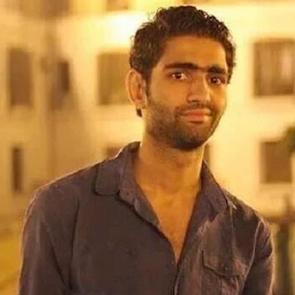
Abdelrahman Tarek was arrested in September 2019 during a judicial observation session and has been held in arbitrary detention ever since, despite court orders for his release. He has been charged three times with joining an illegal organisation.
- Country
- Egypt
- Role
- Human rights monitor
- Status
- Pre-trial · no verdict
Approved
The arrest, and what followed.
Background and Work
Abdelrahman Tarek is a human rights defender working with the Al-Nedal Centre for Rights and Freedoms, an Egyptian organisation that documents violations of free speech and monitors detention facilities. His work focuses on the rights of prisoners and on cases of enforced disappearance, a practice that has become systematic in Egypt since 2013. He regularly attended police stations and prosecution offices to observe judicial proceedings and document the treatment of detainees in state custody.
The Arrest
On 10 September 2019, Abdelrahman Tarek was arrested by Egyptian security forces while conducting his daily judicial observation session at Qasr Al-Nile police station in Cairo. He was detained without charge and subjected to ill-treatment and torture during the early period of his detention. His arrest followed the pattern of targeting human rights monitors who document abuses within the detention system.
Detention and Recycled Charges
On 30 April 2020, the Public Prosecution in Cairo ordered that Abdelrahman Tarek be held in preventive detention for fifteen days, pending investigations into charges of joining an illegal group, defamation, and misuse of social media. He had already been held for more than seven months without formal charge at that point.
On 10 March 2020, he was granted release under precautionary measures, but the order was never implemented. On 22 September 2020, the Criminal Court of Cairo issued a second release order, also under precautionary measures. This order too was ignored.
On 3 December 2020, after more than seventy days in arbitrary detention following the second release order, the State Public Prosecutor accused Abdelrahman Tarek of involvement in case No. 1056 of 2020, alleging that he joined and funded a terrorist organisation. The case file does not specify the name of the organisation or present evidence to support the charges. This marked the third time prosecutors charged him with joining an illegal organisation. The Public Prosecutor ordered a further fifteen days of pretrial detention on the same day.
Hunger Strikes and Health Deterioration
Abdelrahman Tarek launched his first hunger strike on 3 December 2020, the day prosecutors added him to the new case. He refused food for fifty-three days in protest against the continued renewal of his pretrial detention and the state's refusal to enforce judicial release orders. On 17 January 2021, after more than forty days without food, he was transferred to Tora Prison hospital due to the deterioration of his health. He ended the hunger strike on 4 February 2021.
On 11 February 2022, he began a second hunger strike to protest his unlawful detention. He has been denied family visits since March 2019. Access to his lawyer has been severely restricted throughout his detention.
Legal Context and Ongoing Detention
Abdelrahman Tarek remains in pretrial detention with no trial date set. His case exemplifies the Egyptian state's use of revolving-door prosecutions, in which defendants are added to new case files each time a court orders their release, allowing indefinite detention without trial. The charges of joining an illegal organisation and funding terrorism are standard formulations used to detain human rights defenders, journalists, and political dissidents under Egypt's expansive counterterrorism framework.
He is held in Tora Prison complex. His family continues to be denied access. His health remains a source of serious concern.
Sources on file with HuMENA EditorialReading time · 6 minutes
He has been in arbitrary detention since September 2019, despite two court orders for his release that were never enforced.HuMENA Editorial · 2026
Take action.
Ways to act on Abdelrahman Tarek's case — chosen contextually from country, status, and your location.
Compiled by HuMENA's Egypt research team from primary documentation, public filings, family-supplied legal documents, and confidential partner reporting. Editorial responsibility: HuMENA Editorial Board.
Editorial sign-off · published