JAMILA
MOJAHID
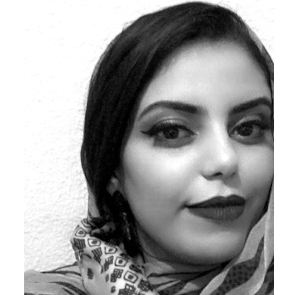
A Sahrawi human rights defender prosecuted for "insulting public officials" after security forces attacked her vehicle and arrested her in May 2022. Her trial was postponed eight times before a verdict was delivered.
- Country
- Western Sahara
- Role
- Human rights monitor
- Status
- Pre-trial · no verdict
Approved
The arrest, and what followed.
Background and Work
Jamila Mojahid is a Sahrawi human rights defender based in Laayoune, the largest city in the territory of Western Sahara, which has been under Moroccan administration since 1975. Her advocacy centres on the right of self-determination for the Sahrawi people, a position that brings her into direct conflict with Moroccan authorities.
She serves as vice-president of the Laayoune section of the Moroccan Association for Human Rights (AMDH), one of the few organisations permitted to operate in the territory that openly criticises state practices. She is also a member of the Sahrawi Human Rights Defenders Association in Western Sahara (CODESA), a network that monitors arrests, enforced disappearances, and restrictions on freedom of expression and assembly.
Her work has made her a recurrent target. She has been detained multiple times, subjected to interrogation, and placed under surveillance by Moroccan security services. The charges she faces are part of a broader pattern of judicial harassment against Sahrawi activists.
The Arrest
On 3 May 2022, Jamila Mojahid was travelling in a vehicle with another Sahrawi woman human rights defender, Alrokby Alkhalifa, and Alkhalifa's six-year-old child. Moroccan security forces pursued the vehicle, forced it to stop, and broke the windshields. Officers violently arrested Jamila and attempted to arrest the child, who is the son of Ali Salem Tamek, a prominent Sahrawi human rights defender.
Later that day, officers arrested Jamila's father, Al-Hussein Mojahid. Both were taken to the Laayoune Police Department and questioned. A police report was drawn up charging them with "insulting public officials while performing their duties." Both were released the same evening.
On 9 May 2022, Jamila was summoned back to the police station. She was informed that criminal proceedings had been opened against her on the same charge. She was detained and brought before the Court of First Instance in Laayoune, where she was granted provisional release on payment of bail set at 3,000 Moroccan dirhams (approximately 270 euros).
Legal Proceedings
Her trial was scheduled to begin on 16 May 2022. It did not. The first hearing was postponed, as was the second, the third, and the fourth. By December 2022, the court had rescheduled proceedings six times. The prosecution cited the absence of a police officer summoned as a witness. That officer never appeared.
On 2 January 2023, the court postponed the trial for the eighth time, moving it to 9 January 2023. Jamila appeared in court accompanied by her lawyer, who challenged the repeated delays and noted that the prosecution had failed to fulfil its obligation to summon witnesses. The case had by then dragged on for more than eight months.
On 16 January 2023, a verdict was expected. The repeated postponements, the failure to produce witnesses, and the trivial nature of the charge all pointed to a process designed not to establish guilt but to exhaust and intimidate.
Surveillance and Intimidation
Each hearing was attended by Moroccan intelligence officers, who photographed Sahrawi human rights defenders who came to observe the trial in solidarity with Jamila. The surveillance was open and deliberate, intended to discourage public support and to document who associated with her.
The judicial proceedings against Jamila Mojahid are part of a wider campaign of harassment against Sahrawi activists. Charges of insulting officials, disturbing public order, or participating in unauthorised gatherings are routinely used to criminalise peaceful advocacy. Trials are prolonged, hearings are delayed, and defendants are kept under legal limbo for months or years.
International Response
Regional and international human rights organisations have documented the pattern of judicial harassment in Western Sahara. Defenders like Jamila Mojahid face not only arrest and prosecution but also travel bans, physical assault, and smear campaigns. The charges against her reflect the Moroccan state's broader strategy of using criminal law to silence dissent in the territory.
Her case remains emblematic of the risks faced by those who document human rights violations in Western Sahara, where the state tolerates no challenge to its narrative of sovereignty and where the cost of advocacy is measured in detentions, trials, and years spent waiting for a verdict that may never come.
Sources on file with HuMENA EditorialReading time · 6 minutes
The trial was postponed eight times over eight months, each delay a tool of intimidation rather than justice.HuMENA Editorial · 2026
Take action.
Ways to act on Jamila Mojahid's case — chosen contextually from country, status, and your location.
Compiled by HuMENA's Western Sahara research team from primary documentation, public filings, family-supplied legal documents, and confidential partner reporting. Editorial responsibility: HuMENA Editorial Board.
Editorial sign-off · published